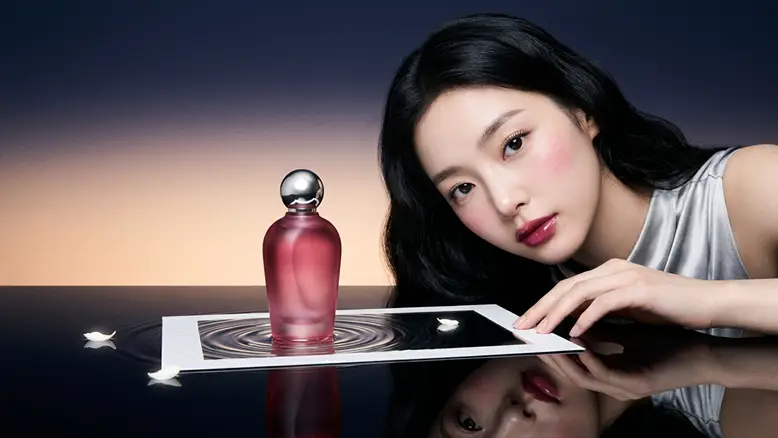
Transparent glass, coloured liquid, and atomized mist expose weak AI prompts faster than any other product category. When directing fragrance or beverage spots inside an AI product video generator, asking a model for "luxury perfume splash" in one vague sentence usually produces rubbery droplets and melting bottle necks. Reliable glass-and-liquid cinema comes from locking directional refraction physics on a still plate first, then animating one isolated fluid variable per shot.
Below is the exact lighting-and-motion workflow we use on PixTV—demonstrated with a sculpted ruby-rose frosted glass fragrance flacon topped with a mirror-polished silver sphere cap.
Three Physical Rules That Make AI Glass & Liquid Look Filmed
Optical / Fluid Element | Common AI Failure | How to Prompt & Control It on PixTV |
|---|---|---|
Glass Caustics (Light Projection) | Bottle casts a flat grey shadow like opaque plastic | Specify hard low-angle side sunlight + colored refractive light patterns projected onto stone |
Atomized Fragrance Mist | Looks like thick white cartoon smoke or steam | Specify dark backdrop + hard studio rim backlight to illuminate fine suspended micro-droplets |
Condensation & Ripples | Whole glass silhouette wobbles when water moves | Lock bottle geometry via image-to-video ( |
Step 1: Separate Sunlight Caustics From Backlit Mist on Clean Starting Plates
Glass needs a single unmistakable light direction to prove thickness. Notice how the exact same ruby-rose flacon behaves under two classic commercial lighting setups—raking sunlight on pale travertine for warm refractive caustics versus dark wet slate with hard rim-light to catch ultra-fine nozzle mist:
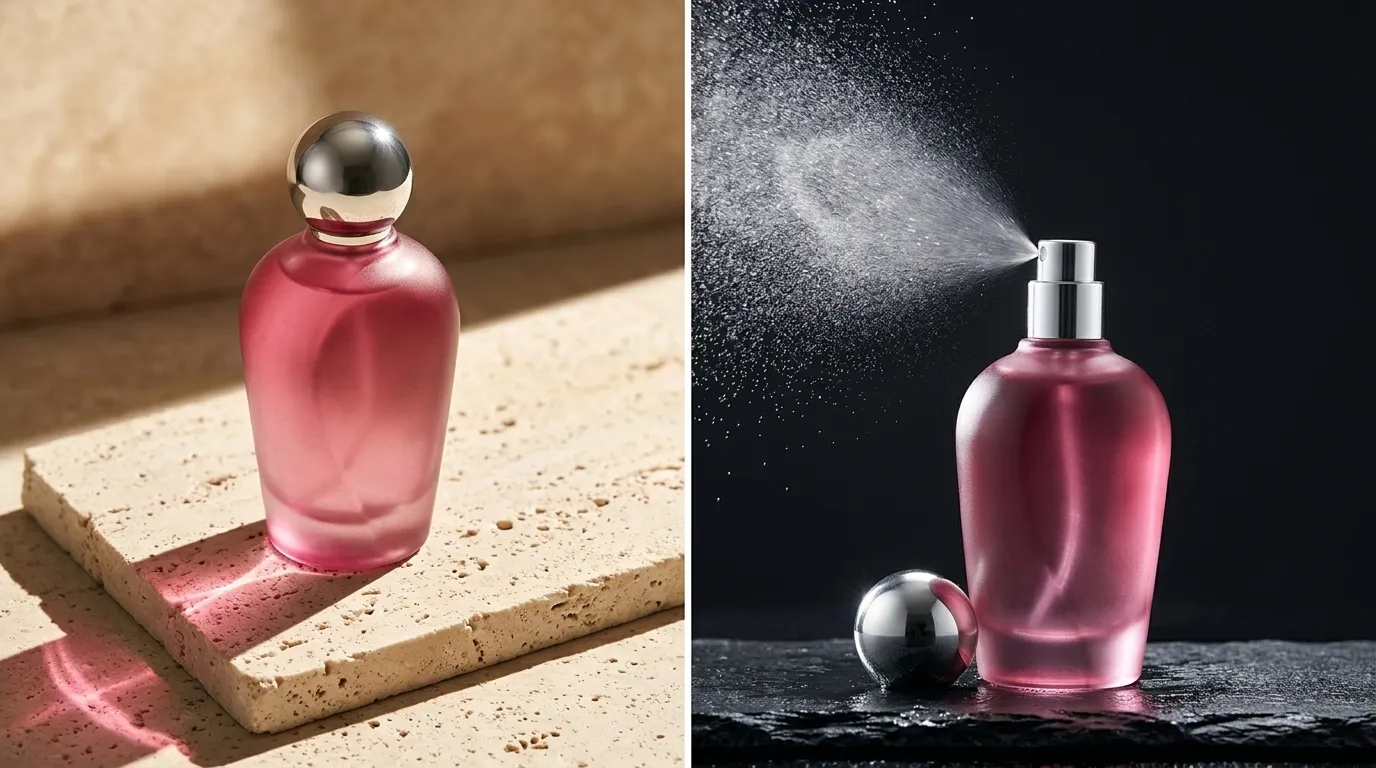
2-panel luxury fragrance lighting and fluid physics study, 16:9 widescreen. Left panel: frosted ruby-rose glass perfume flacon with a polished silver sphere cap on cream travertine stone under low raking sunlight casting vivid ruby-pink glass caustics. Right panel: identical ruby-rose flacon uncapped on dark wet slate under crisp studio rim-light capturing an ultra-fine cloud of atomized fragrance micro-mist bursting upward from the silver nozzle.
Step 2: Animate Fluid & Light Shimmer at 720p While Keeping Glass Rigid
Once your lighting plate passes inspection, connect it to Seedance 2.5 (for crisp spray burst and synchronized spritz acoustics) or Kling 4.0 (for slow, weighted camera push-ins) at 720p. Keep your video prompt focused strictly on light travel and fluid dispersion—never ask the bottle itself to spin 360 degrees (see our product shape stability guide):
Slow macro push-in at 720p. A single crisp press on the silver atomizer releases a fine, shimmering cloud of backlit micro-mist that drifts upward and slowly dissipates against the dark slate backdrop while the frosted ruby-rose glass flacon remains completely sharp and stationary.
For sunlit caustics shots, move the light source or water surface slightly rather than whipping the camera around:
Locked-off 100mm macro shot at 720p. Subtle golden afternoon light shifts gently across the frosted ruby-rose perfume bottle, causing the luminous pink glass caustics on the travertine stone to shimmer organically.
Building a Complete 10-Second Fragrance or Beverage Spot
Combine one wide atmospheric water-ripple reveal, one raking-light caustics close-up, and one backlit atomizer mist beat—pairing this physics workflow with our single-photo product video guide and hardware demo callout workflow to turn fragrance and beverage photos into videos with sound.
Frequently Asked Questions
Why does glass packaging warp when I prompt big liquid splashes around a bottle?
Large chaotic waves occlude the bottle's silhouette, forcing the video model to re-guess the glass edges behind the water. Keep splashes behind the SKU, use concentric surface ripples around the base, or cut to a dedicated macro pour/mist cutaway.
Which PixTV video model handles water droplets, fizz, and spray sound effects best?
Seedance 2.5 at 720p is ideal when you want crisp micro-bubble effervescence or atomizer spritz physics paired with synchronized native audio; use Kling 4.0 when you want slow, silky dolly glides across wet glass and stone.